
6 Simple Ways to Calm Down When You’re Feeling Stressed
Stress can show up at the most inconvenient times, whether you’re rushing through a busy morning, sitting in traffic, dealing with a frustrating situation, or simply feeling overwhelmed by everything on your plate. While you can’t always remove the source of stress, a few minutes of intentional breathing, movement, or quiet can help you pause and reset. The following techniques require little or no equipment and can be worked into an ordinary day. Try a few to find the approaches that help you feel calmer and more grounded.
Box Breathing

Box breathing is a structured breathing exercise that uses four equal parts: inhale, hold, exhale, and hold again. A common version uses four counts for each part, although you can adjust the timing if four seconds feels uncomfortable. Focusing on a slow, predictable breathing pattern gives you something specific to concentrate on when your thoughts feel scattered. Try it while sitting comfortably and stop if holding your breath makes you feel lightheaded or uncomfortable.
Stretching and Movement Breaks
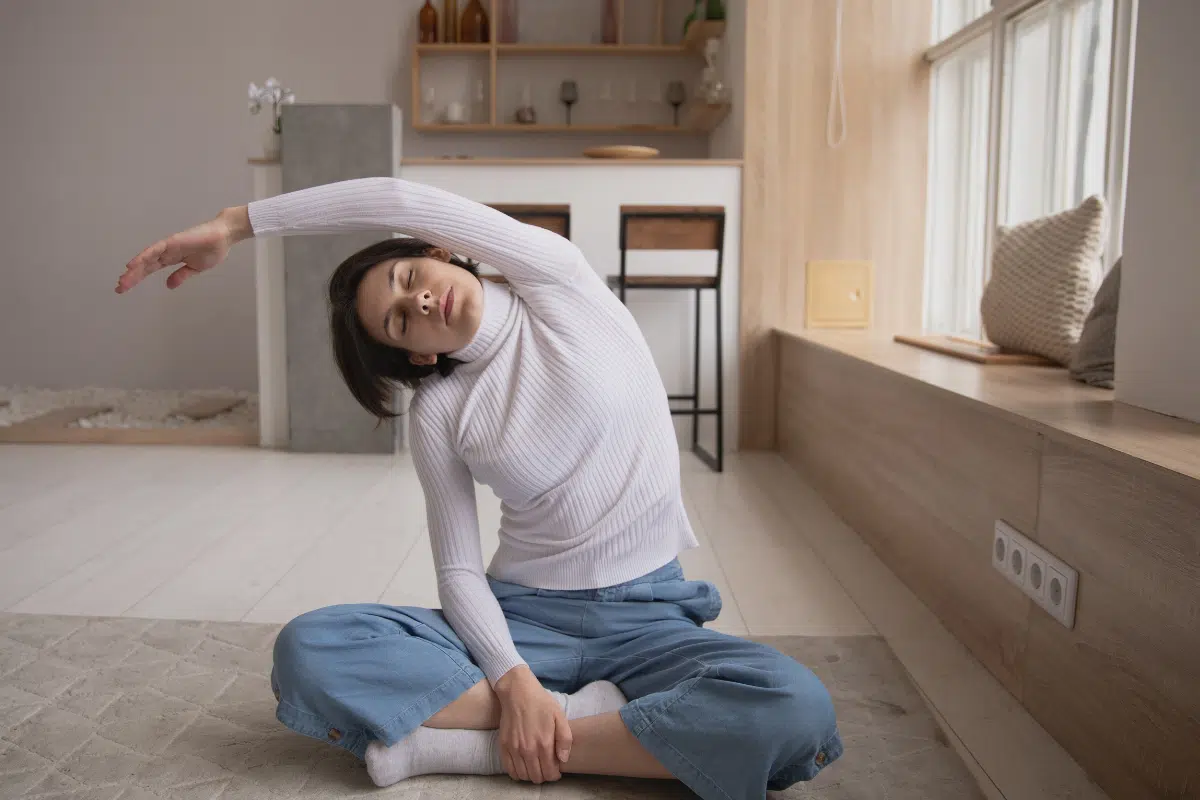
Stress can be accompanied by physical tension, particularly around the neck, shoulders, jaw, and back. Taking a short movement break can give you a chance to change position, loosen stiff muscles, and step away from whatever has been demanding your attention. You don’t need a formal workout—a brief walk, shoulder rolls, gentle stretching, or standing up from your desk can all break up a long period of sitting. Making these small breaks part of your day may also help you feel less physically tense.
The “Physiological Sigh”

The physiological sigh has attracted attention as a simple breathing technique that can be performed in just a few breaths. It involves taking a deep inhale followed by a second, smaller inhale, then slowly exhaling. Research from Stanford and other institutions has examined cyclic sighing and other controlled-breathing techniques for their potential effects on stress and mood. Rather than treating it as an instant cure for anxiety, think of it as a quick breathing exercise you can try when you need a moment to slow down and regain your composure.
A Cool Water Reset

A splash of cool water on your face can provide a simple sensory change when you feel overwhelmed. Rather than promising that cold water will automatically “reset” your nervous system, it’s more accurate to view this as a grounding technique that gives your attention something immediate and physical to focus on. You can also hold a cool washcloth against your face or step outside for a few minutes if the weather is comfortable. Avoid extreme cold exposure, particularly if you have a medical reason to avoid sudden temperature changes.
Listen to Something Calming

Sometimes the easiest way to create a little breathing room is to change what you’re hearing. Try calming music, nature sounds, a short guided meditation, or another type of audio that you personally find relaxing. Stepping away from constant notifications and other sources of noise can also give your mind a much-needed break. If you’re at work or in a public place, headphones can make this an especially convenient option.
Try Positive Visualization

Visualization can be a simple way to redirect your attention when you’re caught up in stressful thoughts. Close your eyes if you’re somewhere safe to do so and picture a peaceful setting, a favorite place, or an upcoming situation going smoothly. Focus on a few specific details—such as what you might see, hear, or feel—to make the exercise more engaging. It won’t eliminate the source of stress, but spending a few quiet minutes imagining something positive can provide a useful mental break.
This post may contain affiliate links or sponsored content. Disclosure Policy